
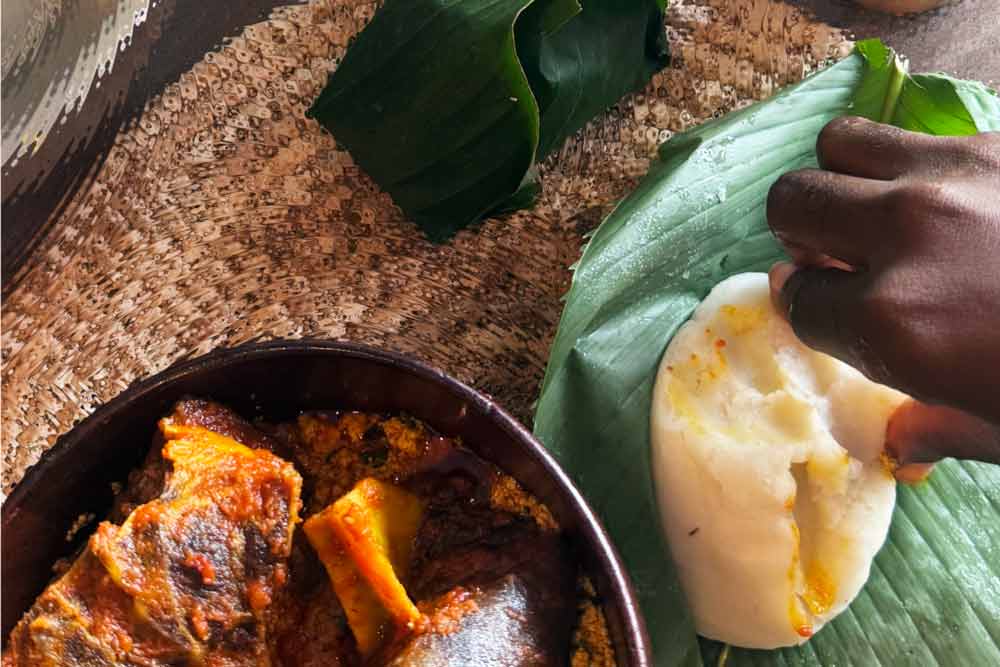
Palm wine has always been more than a drink. Wherever you find it in the world, it carries memory, identity, and a taste of the culture itself. To understand how people experience it today, I spoke with a cross-section of Igbo and Yoruba Nigerians (Gen Z to Gen X) who had taken it in the rural and urban settings. Their stories revealed not only what they eat with palm wine, but also how the drink fits in their lives.
A First Taste: Tradition in a Calabash
For Adeyemi, a Yoruba millennial, palm wine is tied to childhood memories. His first sip came from his grandfather’s calabash in the village. “That was my first alcohol in my life,” he recalled, smiling. He pairs the natural beverage with bush meat. For him, palm wine tastes natural, earthy, and deeply rooted in tradition.
Clinton, another millennial who took it in Port Harcourt, shares a similar curiosity, “I took it from my grandfather; he had gallons of it.” For both, palm wine wasn’t just a trendy discovery, it was an experience facilitated by curiosity from watching their grandfather drink the natural beverage.
A refreshing taste for younger Lagotsians
Among Gen Z interviewees, palm wine is less about ancestry and more about exploration. Amarachi, who moves between rural and city life, grins, “Of course I have taken palm wine before, I am an Igbo girl, several times even.” For her, it goes best with abacha (African salad) and dried meat, often taken just for fun.
Ella, another Igbo Gen Z, tasted palm wine during Christmas in the village. She remembers it as refreshing and best served cold, with a plate of jollof rice. “You know local palm wine tastes the best,” she said, emphasizing that freshness is everything. Faith, also Igbo and Gen Z, shared a similar sentiment. She called it “sweet, beautiful,” and paired hers with Nkwobi, another spicy meat delicacy. Jedidiah was more neutral, he sampled palm wine with pepper soup at a family function and found it “sweet and sour… it wasn’t bad.”

Not everyone falls in love. Tomiwa, a Yoruba Gen Z living in the city, admits, despite pairing it with Ofada rice, he wasn’t impressed by the wine served to him “To me, it is not sweet. It was horrible,” he admitted bluntly. He must have been one of the unlucky to be served old wine, or it just might not have suited him.
The Voice of Experience
The richest reflections came from Engr. Suleiman, a Yoruba man in his mid-40s mentioned he has enjoyed palm wine in multiple settings, from roadside joints in Akure to restaurants like Ofadaboy in Lagos. His favorite moment was when he drank it fresh, straight from the tree into the calabash. “It hasn’t traveled from one hand to another,” he explained, highlighting the purity of the experience.

Unlike the younger crowd who often focus on food pairings, Engr. Suleiman believes palm wine is “the meaning of pleasure, especially in the olden days.” He notes that buying from the right person is important, lamenting that “some people have started diluting and adulterating palm wine” His pairings, when he does choose food, is similar to what we hear above: pounded yam, bush meat, pepper soup, smoked fish.
Patterns & Insights
From these conversations, some clear patterns emerge:
- Freshness matters a lot: People who drank palm wine in rural settings praise palm wine for its natural, refreshing taste while Urban drinkers often complain about quality, hinting at supply and adulteration issues.
- Food pairings are generational: Gen Z tends to link palm wine with popular or celebratory foods like jollof rice, abacha, suya, pepper soup. Gen X, however, pairs it with heavier traditional meals like pounded yam, smoked fish, or bush meat.
- Cultural Identity runs deep: Many interviewees tie palm wine to family, heritage, or specific cultural identity. For some, it was their “first alcohol” they tasted, introduced by elders.
From Adeyemi’s calabash memory to Tomiwa’s disappointing Ofada pairing, each story shows palm wine’s evolving place in Nigerians’ lives. Palm wine is not just about drinking, it’s about where you drink it, who you drink it with, and what sits beside it on your table – that is why it is a culturally inclined drink.
Research by Damilola Oyelere; based in Lagos, Nigeria on assignment as our Cultural Researcher.
Edited by Onye Ahanotu
